
Industrial high powered microwave Generators
RH103‑S01 — 3 kW Industrial Microwave Generator (Overview)
The RH103‑S01 is a continuous‑wave, water‑cooled industrial microwave generator delivering 3 kW of RF power at 2455 ± 15 MHz. It is designed for applications requiring stable, high‑density microwave energy such as materials processing, plasma systems, and industrial heating.
If you are interested in any of these products, please get in touch.
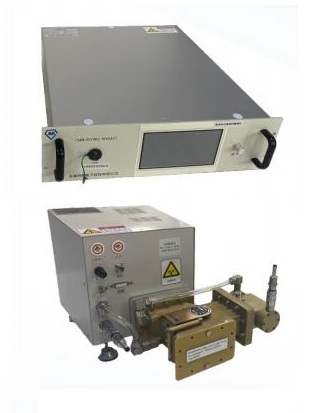
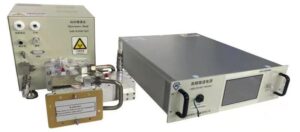
he 6 kW generator is composed of three primary subsystems:
1. 6 kW High‑Frequency Microwave Power Supply
Both the anode power supply and filament power supply use high‑frequency switching technology, providing:
Continuous, smooth power adjustment from 1 kW to 6 kW
High efficiency
Fast response and stable regulation
Reduced ripple and improved magnetron lifetime
The power supply also integrates:
Control electronics
Protection and interlock systems
Monitoring interfaces
2. 6 kW Microwave Head
This module contains the RF‑generation components:
Imported continuous‑wave magnetron (6 kW class)
Excitation cavities / resonant structures
RF coupling hardware for waveguide output
The design ensures:
Narrow spectral output
High power density
Stable long‑term operation
3. Connecting Cables & Integration Hardware
The system includes:
High‑voltage cable set
Filament power cable
Control and signal cables
Waveguide or coaxial RF output interface (depending on configuration)
Users simply follow the wiring and installation instructions in the manual to complete system integration.
🌡 Cooling System
Like the 3 kW model, the 6 kW generator is water‑cooled, ensuring:
Magnetron thermal stability
Continuous‑wave operation without derating
Long service life
📡 Key Performance Characteristics
Microwave output power: 1–6 kW (continuously adjustable)
Frequency: 2450 MHz ± 20 MHz
Waveform: Continuous wave (CW)
Cooling: Water
Power supply type: High‑frequency switching
Features: High efficiency, narrow spectrum, intelligent control, high power density
🔧 Typical Applications
The 6 kW model is widely used in:
MPCVD (microwave plasma chemical vapour deposition)
PECVD
Industrial heating and drying
Materials processing
Laboratory and pilot‑scale microwave systems
It provides a strong balance between power, stability, and system size — ideal for mid‑scale plasma reactors or industrial heating modules.
If you are interested in this generator or any of these products, please get in touch.
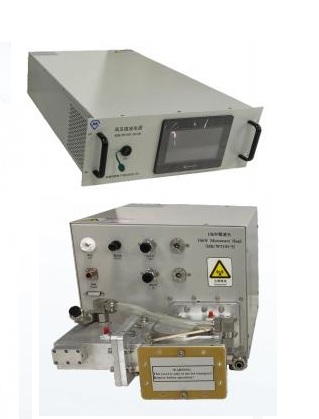
RH103-S01 10kW microwave generator adopts imported high-power continuous wave magnetron to achieve 10kW microwave power output with a frequency of 2450MHz ± 20MHz. Both the anode power supply and the filament power supply use high-frequency switching power supplies, which can achieve continuous adjustable microwave output power from 1kW to 10kW to meet the requirements of different usage scenarios.
This product has the characteristics of high efficiency, narrow spectrum, intelligence and high power density and is widely used in fields such as MPCVD, PECVD and heating.
This product consists of a 10kW high-frequency microwave power supply, a 10kW microwave head and connecting cables. Users can follow the user manual to connect the wires and ensure the normal use of the equipment.
If you are interested in this generator or any of these products, please get in touch.
Inverter-based high-voltage power supplies (HVPs) efficiently generate high-voltage DC outputs from low-voltage inputs. Key aspects:
Design Components
1. Inverter stage: Converts low-voltage DC to high-frequency AC.
2. Transformer: Steps up voltage using magnetic coupling.
3. Rectifier stage: Converts AC to high-voltage DC.
4. Filtering: Reduces ripple and noise.
5. Control circuitry: Regulates output voltage and current.
Advantages
1. High efficiency (up to 95%): Reduced heat and energy loss.
2. Compact design: Smaller size and weight.
3. Low noise: Minimized electromagnetic interference (EMI).
4. Fast response: Quick adjustment to changing loads.
5. High reliability: Fewer components and reduced wear.
Key Parameters
1. Output voltage (kV to MV range)
2. Output current (mA to A range)
3. Power rating (W to kW range)
4. Efficiency
5. Stability (∆V/∆I)
6. Regulation (line and load)
7. Ripple and noise